
In today’s digital world, your website is often the first impression customers have of your business. But did you know that responsive website design can do more than just make your site look good? It can actually help grow your business through better marketing. Whether you’re a small startup or an established brand, having a responsive website is no longer optional, it’s essential.
In this blog post, we’ll explain what responsive website design is, why it matters for marketing, and how it can improve your results online.
What Is Responsive Website Design?
Responsive website design means that your website automatically adjusts to fit any screen size, whether it’s a smartphone, tablet, laptop, or desktop. Instead of creating different websites for each device, one single design works for all.
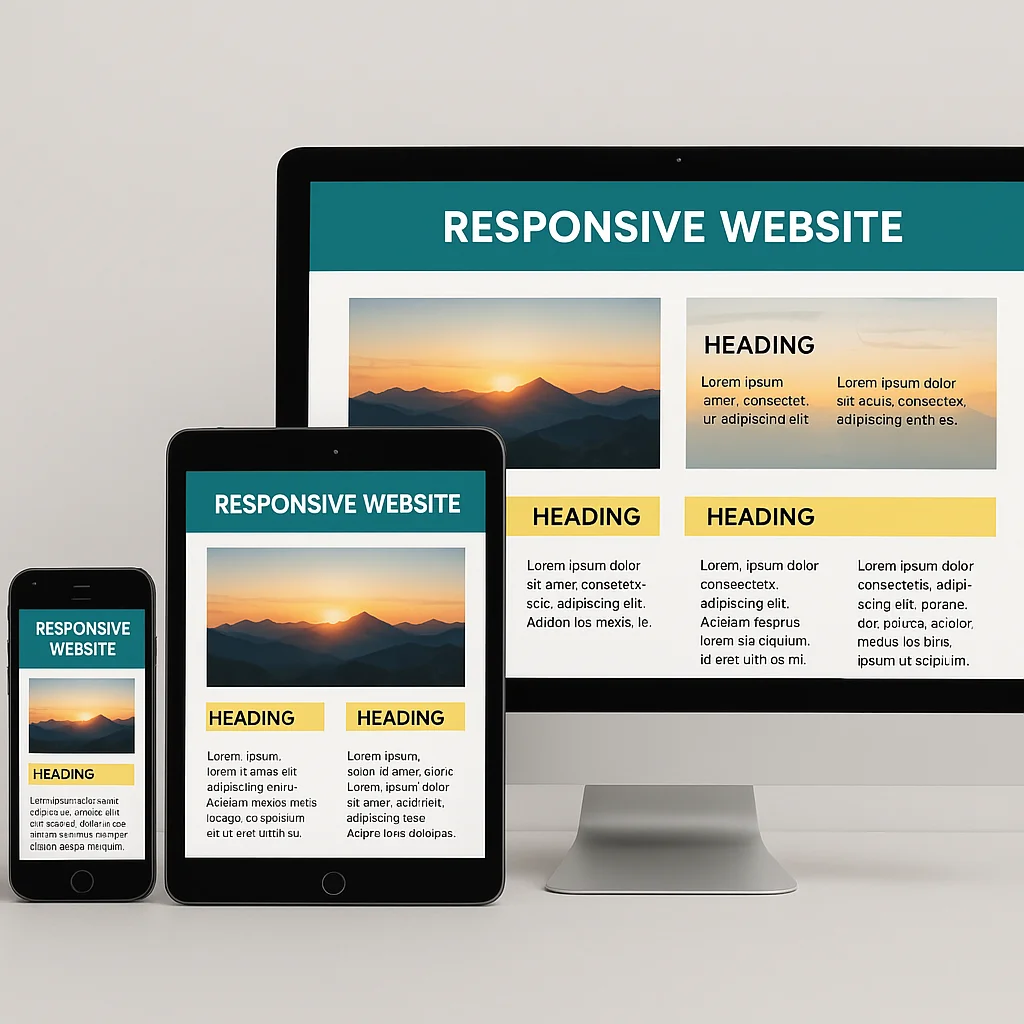
Imagine opening a website on your phone and the text is too small, the images don’t fit, and the buttons are hard to click. That’s what happens when a website isn’t responsive. A responsive design makes sure your site looks great and works perfectly no matter what device someone is using.
Below is an example of responsive design: Same site on phone, tablet, and laptop, this is how a website should look across all device, no cutting image or text.
Why Is Responsive Website Design Important for Marketing?

Marketing is all about reaching your audience and converting them into customers. A responsive website plays a huge role in that. Here’s how:
1. Better User Experience (UX)
Visitors are more likely to stay on your website if it looks good and is easy to use. With a responsive design, your site loads faster, scrolls smoothly, and displays properly. A happy visitor is more likely to become a loyal customer.
2. Improved SEO Rankings
Google prefers mobile-friendly websites. In fact, mobile-first indexing means Google checks the mobile version of your website first. A responsive website design can improve your ranking on search engines, helping more people find your business online.
3. Higher Conversion Rates
When users can easily navigate your site, they are more likely to take action—like filling out a form, calling your business, or buying a product. Responsive websites reduce bounce rates and encourage users to stay longer and engage more.
4. Social Media Integration
Most people use social media on their phones. When you share your website on platforms like Facebook or Instagram, it needs to load perfectly on mobile. A responsive design ensures your marketing links work smoothly, which leads to more clicks and shares.
5. Cost-Effective Maintenance
With just one website to manage, updates and changes become easier and cheaper. You won’t need separate desktop and mobile versions, saving time and money—freeing up resources for other marketing efforts.
How to Use Responsive Website Design in Your Business Marketing
Let’s look at some practical ways to use responsive design as a tool for your business marketing:
1. Optimize Landing Pages
Use responsive landing pages for your ads. Whether someone clicks from a Google ad or a Facebook post, the page should look perfect on any screen. This increases the chances they’ll follow through with your call-to-action.
2. Create Mobile-Friendly Content
Write blogs, videos, and images that load quickly and adjust properly. Even your newsletter sign-up form should be mobile-friendly. Think about how your audience will experience your content on the go.
3. Track User Behavior
Use tools like Google Analytics to see how visitors interact with your site on different devices. If mobile users are leaving quickly, your responsive website design might need improvement.
Key Features of a Great Responsive Website Design
If you’re working with a graphic and web design expert (like us!), make sure your site includes these features:
- Flexible Layouts: Grids and images that resize automatically
- Touch-Friendly Buttons: Easy to tap, even on small screens
- Fast Loading Speed: Optimized for mobile networks
- Clear Navigation: Menus that adapt and stay user-friendly
- Consistent Branding: Your logo, colors, and fonts look perfect everywhere
Real-Life Example: How Responsive Website Design Would Help a Small Business
Let’s say a local bakery wanted more customers to order online. They had a website, but it wasn’t mobile-friendly. Most people who clicked from their Instagram page left immediately because the site was hard to use on phones.
After switching to a responsive website design, the bakery will see a big change. Their mobile bounce rate will drop by 40%, and online orders will double in a space of 2 months. All because people could now browse, choose, and order easily from their phones.
Final Thoughts: Why You Should Invest in Responsive Website Design Now
If your business depends on digital marketing (and most do), you can’t afford to ignore your website design. A responsive website design is a powerful tool that supports all your marketing efforts. It improves your SEO, keeps your audience engaged, and drives more sales.
Whether you’re updating your old site or starting fresh, make sure responsiveness is part of the plan. Your customers are already using their phones, make sure your website is ready for them.
Need a responsive website for your business? We specialize in creating stunning, mobile-friendly websites that boost your marketing and help you grow. [Contact us today] to get started!